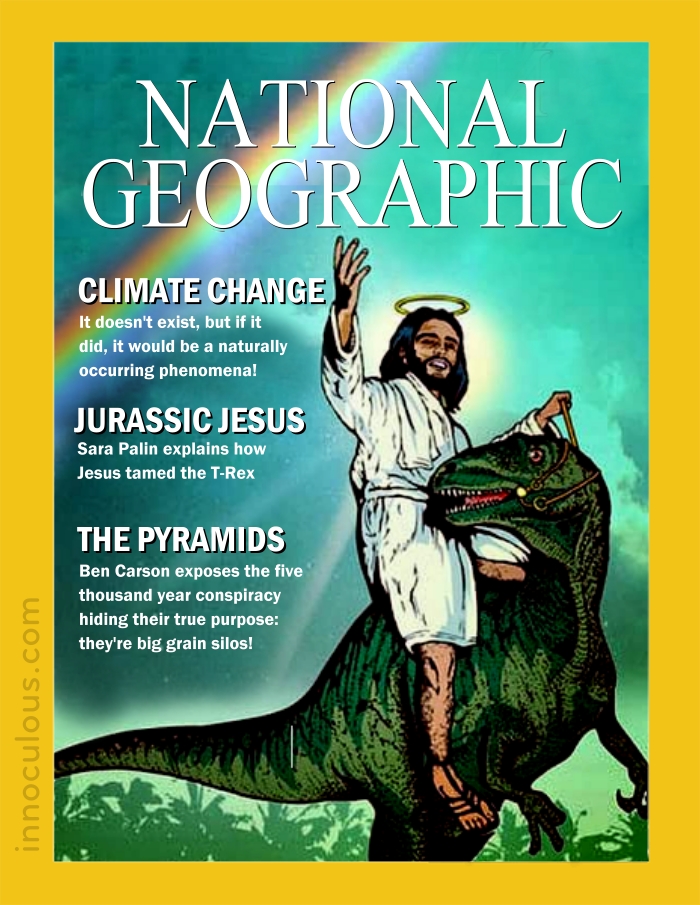
If you’ve been worried about what will happen to National Geographic now that Fox News is essentially taking over, don’t be. At least that’s what Gary Knell says. But Gary happens to be president and CEO of the National Geographic Society, so what the hell else would he say? Well, a few weeks later, the answer to that seemingly rhetorical question turned out to be “you’re fired”. Knell’s corporate speak probably provides the clearest picture of the future of National Geographic’s scientific and academic cred, when he says “This is very exciting for us. We are becoming…an integrated content machine that will be much bigger. We’ll be connecting the dots. The point is to create a scaled-up global enterprise, with more resources.” Clearly all the academic cred will come from the MBA’s.
Well, a grad degree is a grad degree, right? In the end, as much as National Geographic has created a legendary, generation-spanning body of fascinating, well-considered information about science, nature, and the universe in general, let’s face it. The TV channel has always sucked, and if you even subscribed to the magazine (which you probably didn’t), there’s a good chance you have a huge section of yellow on your bookshelf that does little more than anchor the shelving unit to the floor with its surprisingly heavy, glossy stock volumes.
Is Pitchfork Media “Selling Out”?
Perhaps of more concern to anyone under the age of sixty is the recent acquisition of Pitchfork Media by the publishing behemoth Condé Nast, which has had a lot of people asking if it’s a “sellout”. But again, let’s be realistic. Music magazines – whether in print or online – have always been driven by a youth market, and tend to come and go as quickly as trends like duckfacing or hipster beards.
In the eighties, there were great mags like NME and Melody Maker, which crashed under the weight of their own authoritativeness and were quickly nothing but wheelprints under MTV’s media machine. The nineties brought us another promising vehicle called “Spin”, and we know where that went. Thanks to the web, by around 2004 we had literally thousands of music sites to find great music, and even cooler methods for finding them, like Napster. Sure, it was nice when one of these sites rose to the top of the heap to make discovering cool new music easier. But Pitchfork probably reached “Peak Hip” back in 2008 or so, meaning the twenty-somethings that both created and consumed the thing are now in their thirties, or even forties. Don’t cry too hard about Pitchfork, it will survive, if only to feed its millennial male consumer.
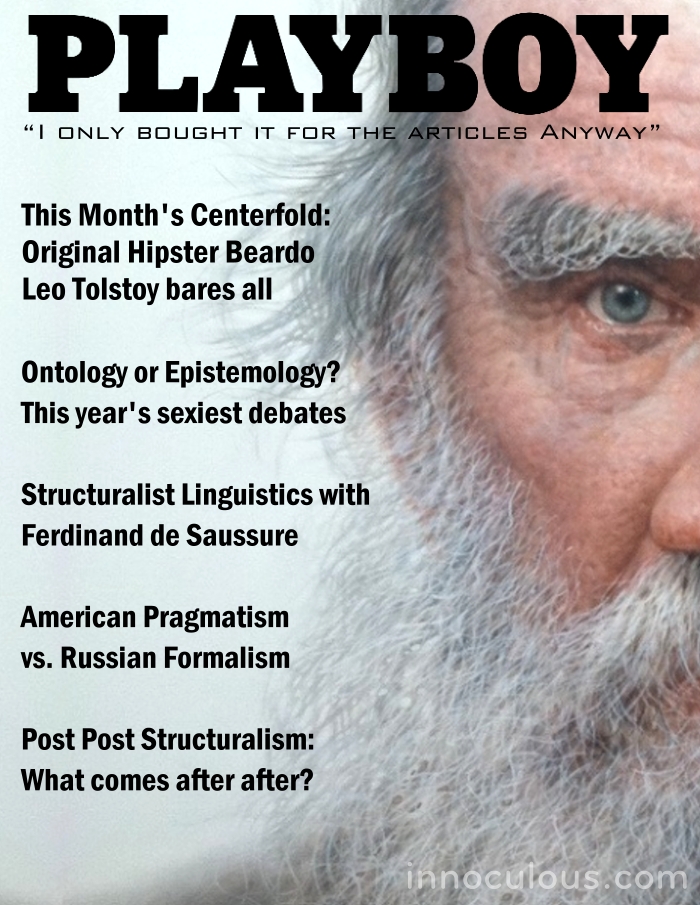
It’s finally true: you “only buy it for the articles”
Playboy would be a little off-topic here, except that it also is a magazine of epic pop culture importance, and is also going through a shocking evolution to adapt to changing markets. The magazine’s choice to eliminate nudity is probably more shocking than its choice to ADD it was in the sixties. But Adweek’s Emma Bazilian hints that it might be the best thing to happen to the brand in quite a while. I personally never actually purchased the magazine; stealing issues from my dad’s secret stash kept me well-supplied for the couple of years that I needed them, and by the time I might have become part of its target demographic – the smoking, smartypants, hard drinking male – I was too busy doing all the things the magazine focused on to sit and read about them.
The net result of these changes and acquisitions will probably be quickly forgotten as the media markets find new vehicles to ram consumerism down our throats, so relax.
In the meantime, we thought we’d speculate on what future issues of the three magazines might look like:
With Condé Nast as the new owner, a print version seems obligatory, in our opinion. Consipated thirty-something guys struggling to pay off their student loans can read about Michael McDonald and Toto as they groan in the lou.

The old line “I only buy it for the articles” has been rendered meaningless now. But since they’re taking the literary plunge, they may as well “stick it all the way in”. We’re referring to the nail in the coffin. Shame on you. Personally, I can’t wait to finally learn the meaning of “epistemology”.
We understand Sean Hannity will explain the perfectly valid science to justify a eugenics resurgence, and Bill O’Reilly will explain the science behind whatever Bill O’Reilly happens to be talking about at any given moment.